
What Is Blown Double Glazed Unit Replacement?
Blown double glazed unit replacement is the trade term for swapping a sealed glass unit that has lost its airtight seal — a "blown" unit — for a new one built to the same size and thickness. A sealed unit is two (or three) panes held apart by a spacer bar and bonded with a primary and secondary sealant. Once that bond fails, moisture can enter the cavity and thermal performance may deteriorate. The usual lasting repair is a compatible replacement sealed unit.
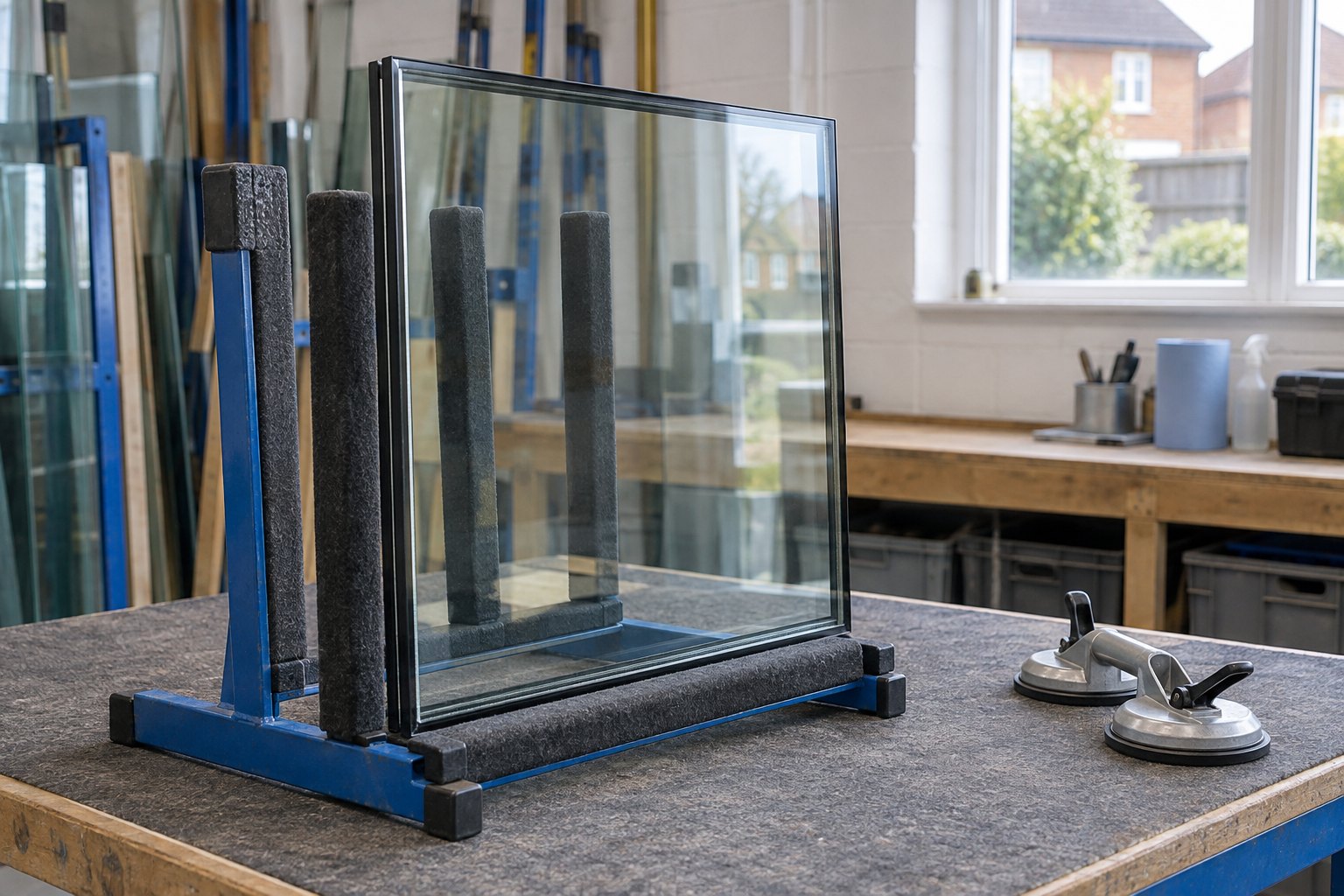
Because the work is about ordering and fitting the right unit, it is also a good moment to upgrade what's in the frame: modern units can be specified with better coatings, warmer spacers, a different glass type or a thicker cavity if the frame allows.
Signs That Need a Glazier's Assessment
- A faint haze or water staining inside the cavity, sometimes only visible in low sunlight
- Sealant around the unit edge that has cracked, shrunk or turned sticky
- A spacer bar that has bowed, rusted or pulled away from the glass
- Panes that appear slightly distorted, as if the glass has bent inwards
- Beads or gaskets that have shrunk back, leaving gaps where water can reach the unit edge
- A unit that rattles or moves when the sash is opened
Internal moisture can indicate edge-seal failure, but loose beads, rattling glass and distorted reflections can have other causes. A glazier should inspect the complete glazing assembly before deciding which parts need replacement.
Replacement Unit Specifications Explained
A like-for-like unit fits straight back into the frame, but you often have choices within the same overall thickness:
- Unit thickness — common sizes are 20mm, 24mm and 28mm overall. The new unit must suit the frame's glazing rebate; a larger cavity only works if the beads and gaskets allow it.
- Low-emissivity glass and gas fill — a soft-coat low-E inner pane plus argon in the cavity improves heat retention compared with older air-filled units.
- Warm-edge spacers — plastic or composite spacers in place of aluminium reduce heat loss at the edge and make condensation along the bottom of the glass less likely.
- Safety glass — toughened or laminated glass is required in certain low-level and door-adjacent positions, and any unit that is replaced there should comply.
- Special glass — obscure patterns for privacy, acoustic laminates for traffic noise, solar control for south-facing rooms, or self-cleaning coatings for hard-to-reach panes.
What to Include When Asking for a Quote
List each blown unit by location and give its visible glass size, noting whether it sits in an opening sash or a fixed pane. If you can see the beads from inside, say so — internally beaded windows are quicker and safer to reglaze than externally beaded ones, which on an upper floor may need access equipment. Mention any units with internal Georgian bars, leaded patterns or obscure glass that will need to be copied.
State whether you want a straight like-for-like swap or would like prices for upgrades such as warm-edge spacers, acoustic glass or solar control. If the window is next to a door, in a door, or has glass close to the floor, point this out because the glazier will need to supply toughened or laminated glass in those positions.
The written quote should list each unit with its dimensions and overall thickness, the glass make-up for each pane, spacer type and gas fill, and the guarantee period on the new units. Check it covers removal of the old glass, new gaskets or beads if the originals are brittle, access equipment where needed, and VAT.
How Much Does Blown Unit Replacement Cost?
| Job size | Typical cost |
|---|---|
| One standard clear unit, internally beaded | £100 – £200 |
| Two or three units, or one large/toughened unit | £200 – £500 |
| Several units with upgrades or upper-floor access | £500 – £900+ |
Unit size, glass type and access are the main price drivers. Laminated, acoustic and patterned glass cost more than standard clear, and externally beaded upstairs windows can add a significant labour charge.
The Unit Replacement Process: What to Expect
- Measuring. The glazier checks the rebate size and unit thickness and notes the glass type and any bars.
- Specification. You agree like-for-like or upgraded glass, and the order goes to the unit manufacturer.
- Removal. Beads are carefully removed, the blown unit is cut free if bonded, and old packers are cleared out.
- Glazing. The new unit is placed on bridging and location packers so the sash is supported and drains correctly.
- Re-beading. Beads and gaskets are refitted or renewed, and the sash is checked for smooth operation.
Planning Permission and Building Regulations
Changing only a sealed unit in a frame that stays in place is normally regarded as a repair, so neither planning permission nor a building regulations certificate is usually needed. The new glass should still meet the safety glazing requirements for its position. On listed buildings, even glass changes can need consent, so check first. If the glazier finds the frame is too far gone and recommends full replacement, that becomes controlled work covered by building regulations.
How to Choose a Glazier for Sealed Unit Work
- Do they measure themselves rather than relying on your sizes?
- Which unit manufacturer do they use, and what do the product and fitting guarantees cover?
- Will they quote for warm-edge spacers and low-E glass as standard?
- How do they reach externally beaded windows above ground level?
- Will they renew perished gaskets while the unit is out?
- Are they a member of a recognised body such as the Glass and Glazing Federation?
Frequently Asked Questions
Is a blown unit the same as misted double glazing?
They describe the same failure. "Blown" refers to the broken seal; misting is the most visible symptom. A unit can be blown for some time before condensation shows.
Can I fit a thicker unit to improve insulation?
Only if the frame's rebate and beads can take it. A glazier can check whether an alternative bead allows a slightly thicker unit, but many frames are limited to the original size.
How long do new sealed units last?
Service life varies with manufacture, exposure, drainage and fitting. Ask for the replacement unit guarantee in writing, including exclusions and whether labour is covered if it fails.
Why is externally beaded glazing more expensive to replace?
The glazier may need to work from outside and arrange suitable access equipment. Height, obstacles below the opening and the condition of the beads can increase the labour and material costs.
Need new sealed units? Send your sizes and up to four local glaziers may quote.