
What Is Misted Double Glazing Replacement?
Misted double glazing replacement is the fix for a window that looks foggy or cloudy because moisture has got inside the gap between its two panes. A double glazed pane is a factory-sealed unit; when the seal around its edge breaks down, damp air seeps in, the drying agent in the spacer bar becomes saturated, and condensation forms on the inner faces of the glass where you can't wipe it. The usual remedy is to take out the failed unit and fit a new one in the existing frame.
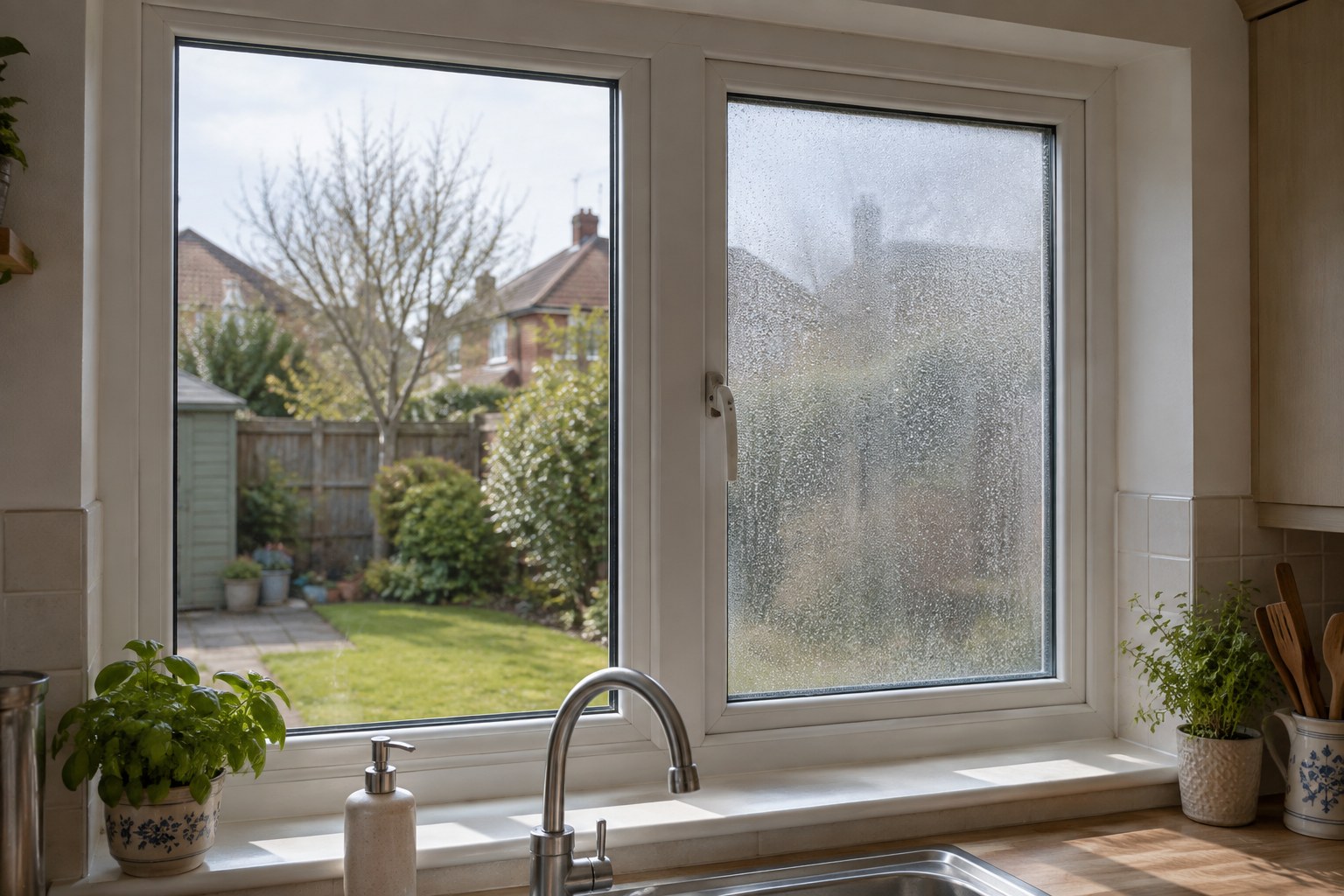
Misting can affect just one pane in an otherwise serviceable window. The good news is that, provided the frame is in decent condition, you don't need a whole new window — just new glass.
Signs Your Double Glazing Has Misted
- Fog or droplets that stay visible after you wipe both the inside and outside of the glass
- Mist that comes and goes with the weather — often worst on sunny mornings after a cold night
- A white, streaky or rainbow-like residue inside the unit once the moisture dries
- Water pooling along the bottom edge between the panes
- A silvery spacer bar that looks stained or corroded
- That pane feels noticeably colder to the touch than the others in the same room
Condensation that wipes off the room-facing surface is not, by itself, evidence of a failed sealed unit. It depends on indoor moisture, temperature and ventilation, which should be assessed separately. Check only surfaces you can reach safely without leaning out.
Options for Fixing Misted Windows
- Replace the sealed unit — the standard, lasting fix. A glazier measures the pane, orders a new unit to size and fits it into the existing frame, usually from the inside by removing the glazing beads.
- De-misting services — some firms drill small holes in the glass, clean and dry the cavity and then plug the holes. It can improve appearance, but the unit no longer holds its insulating gas and the result is not the same as a new sealed unit. Ask what guarantee is offered.
- Replace the whole window — worth considering only if the frame is also failing, or if most panes in an old window have already misted.
What to Include When Asking for a Quote
Tell the glazier how many panes are misted and which windows they're in, and measure the visible glass on each one (width × height) as a rough guide — they will take exact sizes themselves. Mention whether the panes are plain, have Georgian bars or leaded designs between the glass, or use patterned obscure glass in a bathroom, because the replacement unit has to match.
It helps to say what the frames are made of and roughly how old they are, and whether the windows are on the ground floor or need a ladder or scaffold tower to reach from outside. If there is a manufacturer's sticker or etched mark in the corner of the glass, a photo of it can show the original date and specification, and whether the unit might still be under a guarantee.
A clear quote for misted unit replacement should give a price per pane including VAT, state the glass specification (low-emissivity coating, gas fill, spacer type), confirm whether any panes need toughened safety glass because of where they sit, and say how long the new units are guaranteed against misting again. It should also say whether the old units are taken away.
How Much Does Misted Double Glazing Replacement Cost?
| Job size | Typical cost |
|---|---|
| One small or medium pane | £80 – £150 |
| One large pane or two medium panes | £150 – £280 |
| Three or four panes in one visit | £280 – £450+ |
Most glaziers charge per unit, with a minimum call-out. Toughened glass, obscure patterns, decorative bars and panes that need access from outside above ground floor increase the cost. Ordering several units at once is usually cheaper per pane than separate visits.
The Misted Unit Replacement Process: What to Expect
- Measuring visit. The glazier removes a bead or checks the frame to confirm the exact unit size and thickness.
- Ordering. The new sealed unit is made to measure, often within one to two weeks.
- Removal. On the return visit the glazing beads are unclipped and the misted unit lifted out.
- Fitting. The new unit is set on packers so the sash still opens and closes properly, then the beads and gaskets go back in.
- Check and clean. The window is tested for smooth opening and the glass is cleaned before the glazier leaves.
Planning Permission and Building Regulations
Replacing a misted sealed unit in an existing frame is generally treated as a repair, so it does not usually need planning permission or a building regulations certificate. Glass in critical locations — such as low panes and glazing in or next to doors — still needs to be safety glass, and a good glazier will check this. If the home is listed, ask the conservation officer before changing historic glazing. Anything that replaces the whole frame is a different matter and falls under building regulations.
How to Choose a Glazier for Misted Units
- How long is the new unit guaranteed against misting?
- Will the replacement match the thickness and appearance of your other panes?
- Does the price include VAT, the call-out and disposal?
- Do they check whether toughened glass is needed before ordering?
- Can they adjust or lubricate the hinges while they are there?
- Are they a member of a trade body such as the Glass and Glazing Federation?
Frequently Asked Questions
Why has my double glazing misted up?
The perimeter seal of the unit has failed, letting moist air into the cavity. Age, sunlight, water sitting in the frame rebate and poor drainage all speed this up.
Can misted double glazing be fixed without replacing the glass?
De-misting services can clear the view, but they don't restore the original sealed unit. A new sealed unit is the usual replacement option; ask for the product and fitting guarantee terms before ordering.
Do I need a whole new window if one pane is misted?
Usually not. If the frame, hinges and locks are in good order, the glazier only needs to replace the misted unit, which costs a fraction of a new window.
Does misted glazing make my home colder?
A failed unit has lost its dry, sealed cavity, so it insulates less well than when it was new. The difference per pane is modest, but several misted panes in one room can make it feel colder.
Got foggy panes? Tell us how many and up to four local glaziers may quote to replace them.