
What Is uPVC Window Replacement?
uPVC window replacement is the fitting of new windows made from unplasticised polyvinyl chloride — the rigid, weather-resistant plastic used in most UK replacement windows. It may mean swapping ageing timber or aluminium frames for uPVC, or upgrading first-generation uPVC windows whose profiles, hinges and locks have worn out. Modern uPVC systems are far better than the thin, flat profiles of the 1980s, with multiple internal chambers, reinforcement where the system design requires it and a wide choice of finishes.
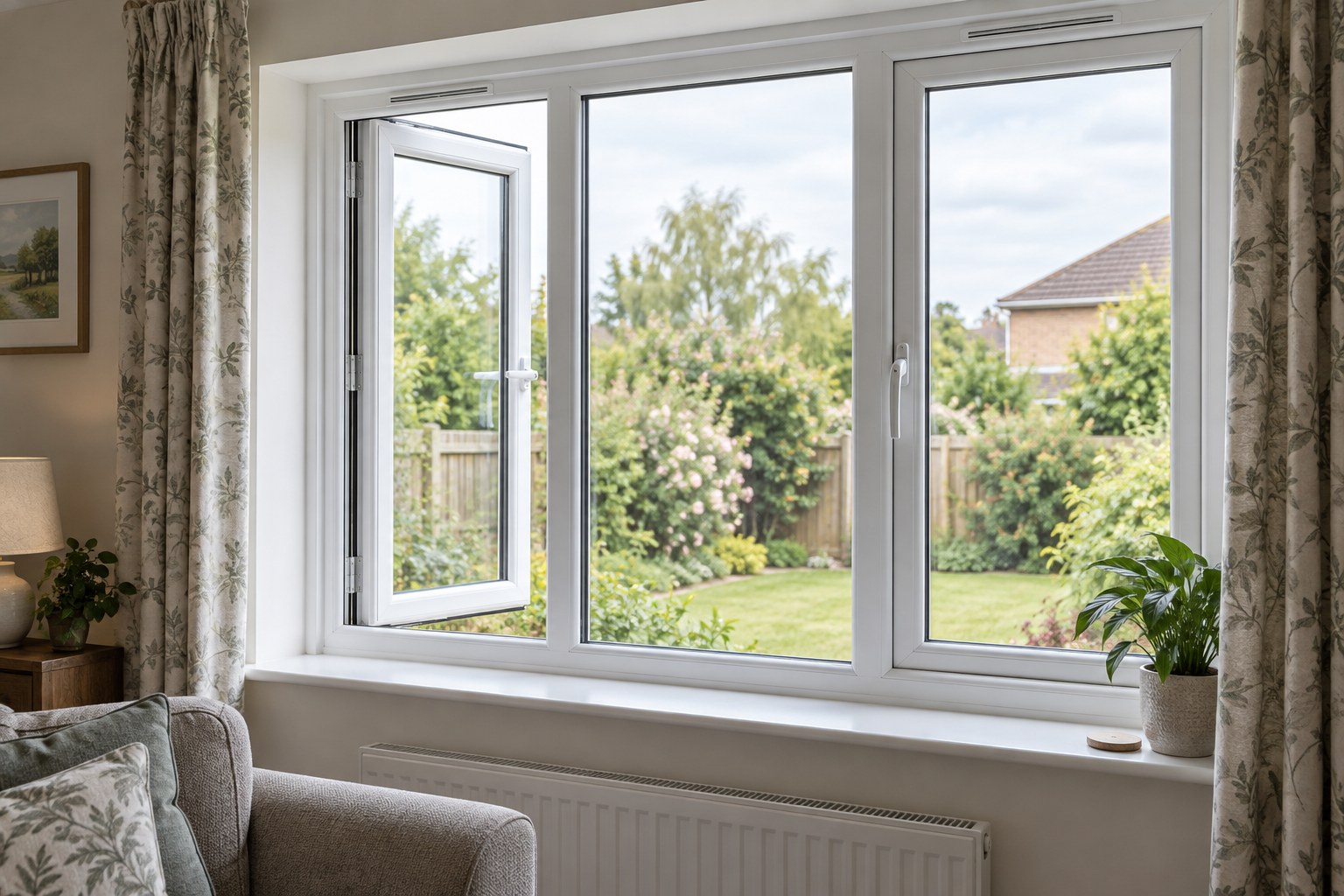
Low maintenance is the main draw: there's no sanding or painting, a wipe with soapy water keeps it clean, and hinges only need occasional lubrication.
Signs Your uPVC Windows Need Replacing
- White frames that have turned yellow, chalky or grey and won't clean back
- Cracks at the welded corners of the frame or sash
- Flat, thin profiles that flex when pushed and let in air along the seal
- Single-point latches rather than multi-point espagnolette locks
- Friction hinges that have been adjusted many times and still let the sash drop
- Persistent draughts after checking repairable hinges, weather seals and locking parts
- Woodgrain foil peeling away from the edges of the profile
uPVC Window Styles and Finishes Explained
- Casement windows — the most common style, with side-hung or top-hung openers. Suits most post-war houses and is the most economical option.
- Tilt-and-turn windows — open inwards for cleaning and tilt at the top for ventilation. Security in that position depends on the tested product, so do not assume an open window is secure. Popular for flats, loft rooms and wide openings.
- uPVC sliding sash — replicates the look of traditional timber box sashes for Victorian and Edwardian homes, with far less maintenance. Some conservation areas may still insist on timber.
- Flush sash — the sash sits level with the frame for a cleaner, cottage-style look.
- Finishes — white remains the cheapest; anthracite grey, black, cream and woodgrain foils such as rosewood or golden oak cost more, and dual-colour options (white inside, colour outside) are widely available.
Profile depth (often 70mm or more on better systems), the number of internal chambers and the energy rating of the complete window are useful ways to compare brands.
What to Include When Asking for a Quote
Tell the installer what the current frames are made of — replacing timber with uPVC often involves more making good around the reveals than swapping old uPVC for new. Give the number of windows, note any bays, and say which style you'd like for each opening, especially if you're considering tilt-and-turn for upstairs rooms or sash-style frames on a period front.
Be specific about colour. A woodgrain foil or a grey exterior changes the price and the lead time, and you should say whether you want the colour on one side or both. Mention if you'd like matching uPVC cills, new window boards inside, or cladding to cover old timber sub-frames.
The written quote should name the uPVC system and its profile depth, state the energy rating or U-value, list the lock type and handle finish, and confirm trickle vents and any restrictors or fire-escape hinges. It should also say whether the price includes removal and disposal of old frames, internal and external trims, and registration with a competent person scheme.
How Much Does uPVC Window Replacement Cost?
| Job size | Typical cost |
|---|---|
| Single white uPVC casement | £400 – £900 |
| Three to five windows, or one uPVC bay | £1,500 – £4,500 |
| Larger uPVC order; whole-house scope depends on count and specification | £4,500 – £8,000+ |
Plain white casements sit at the bottom of the range. Coloured or woodgrain foils, uPVC sliding sashes, tilt-and-turn mechanisms and bays all add to the cost, as do upper-floor access and extensive reveal repairs after removing timber frames.
The uPVC Window Replacement Process: What to Expect
- Survey and choices. Openings are measured, and you confirm styles, colours, hardware and glass.
- Fabrication. The windows are cut, welded and glazed to size, typically taking a few weeks; foiled colours can take longer.
- Fitting day. Old windows are removed one at a time and the openings cleaned back.
- Fixing. Each uPVC frame is fixed into the reveals, packed level, and the sealed units are glazed in.
- Trims and sealing. Cills, cover trims and exterior silicone are finished, and internal boards or plaster are made good.
- Demonstration and certificate. The installer shows you how locks, restrictors and vents work, and registers the job.
Planning Permission and Building Regulations
For most houses, replacement uPVC windows of a similar appearance fall under permitted development. Changing from timber to uPVC can be a problem in conservation areas, on listed buildings, where an Article 4 direction applies, or in flats, so check with the local planning authority before ordering. Leaseholders may need the freeholder's consent too.
New uPVC windows must comply with building regulations for energy efficiency, ventilation, safety glazing and means of escape. In England and Wales, an installer registered with an applicable competent person scheme such as FENSA can self-certify and issue a certificate; keep it safe, as solicitors ask for it when you sell. The Planning Portal building regulations guide summarises the requirements in England. Building control is an alternative compliance route; Scotland and Northern Ireland have separate arrangements.
How to Choose a uPVC Window Installer
- Which uPVC profile system do they fabricate or buy in, and is it a recognised brand?
- What is the window energy rating, and is it shown on the quote?
- Are multi-point locks and security-tested hardware included as standard?
- How long are the frame colour and foil guaranteed not to fade or peel?
- Will they fit fire-escape hinges on upstairs habitable rooms?
- Is the guarantee insurance-backed, and are they competent person scheme registered?
Frequently Asked Questions
How long do uPVC windows last?
Service life varies with the window system, exposure, installation and maintenance. Hinges and locks can need attention before the frames wear out, so inspect repair options rather than replacing windows based on age alone.
Can uPVC windows look like traditional timber?
Woodgrain foils, flush sashes and sliding sash designs can give a traditional appearance. In conservation areas, check whether the planning authority will accept uPVC before you commit.
Are coloured uPVC windows harder to maintain?
Not really. Foiled and coloured frames are cleaned in the same way as white ones, though abrasive cleaners and solvents should be avoided to protect the finish.
Can old uPVC windows be recycled?
Yes. Many installers send old uPVC frames to specialist recyclers, where the plastic is reprocessed into new profiles. Ask how your installer disposes of removed frames.
Planning new uPVC windows? Send one enquiry and compare up to four local quotes.