
What Is Double Glazed Door Replacement?
Double glazed door replacement is the removal of an existing external door and frame and the installation of a new, factory-made doorset with double glazed panels — a front door, back door, French doors or a sliding patio door. Unlike swapping a door leaf on existing hinges, a complete doorset replacement includes the outer frame, threshold, hinges, multi-point locking and glass, fitted and sealed as one unit into the opening.
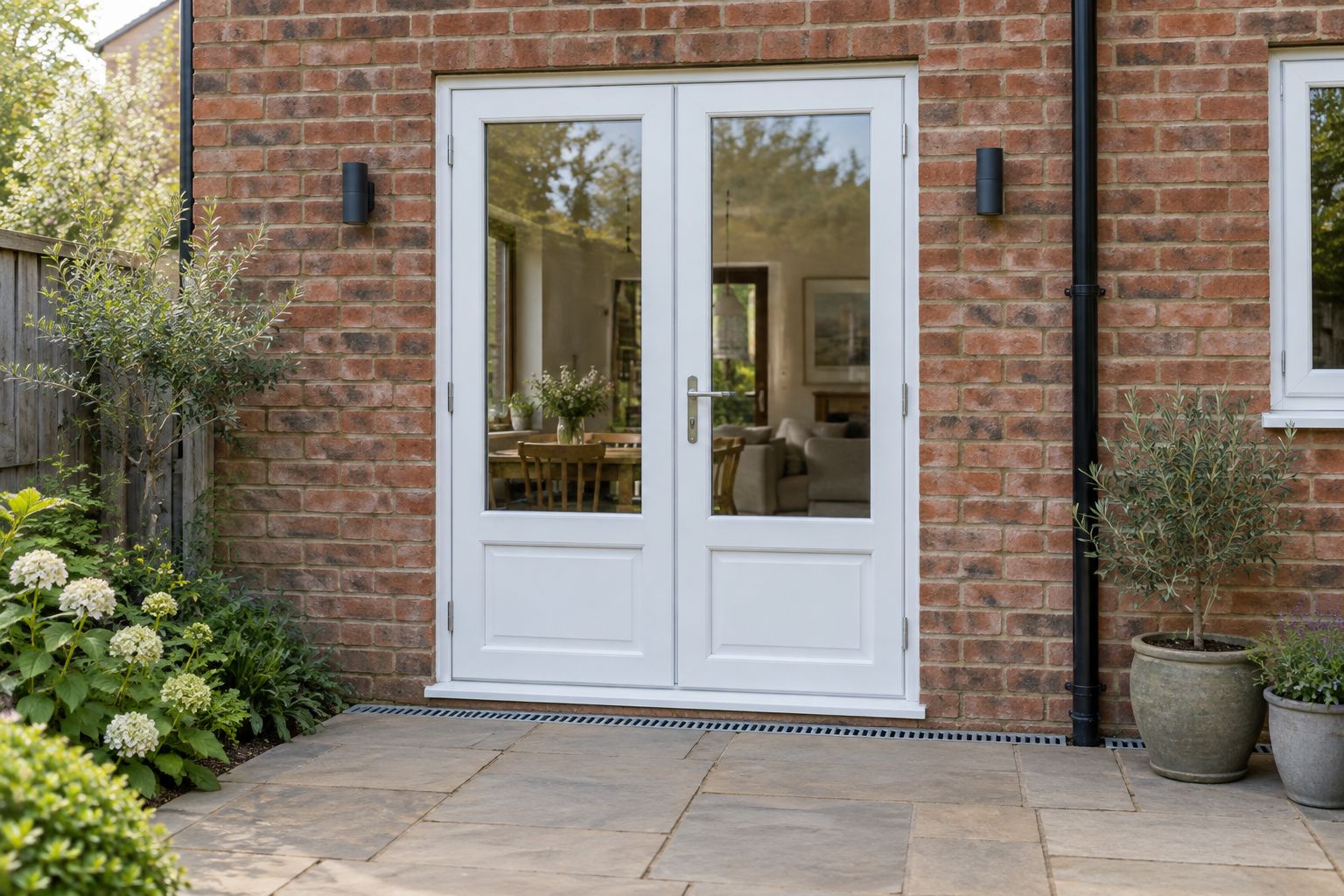
Most homeowners are prompted by security worries or cold draughts: older doors often have worn locks, dropped leaves that no longer seal, and single-glazed or poorly performing panels.
Signs You Need a New Door
- The door has dropped and scrapes the threshold or needs lifting to lock
- Daylight or draughts come through around the edges when it's closed
- The multi-point lock is stiff, jams or the handle has to be forced up
- uPVC panels are cracked, discoloured or bowed
- A timber door has swollen, split or rotted along the bottom rail
- Patio doors are hard to slide, jump off their track or have worn rollers
- The glass panels are single glazed or not safety glass
Door Types and Materials Explained
- uPVC doors — the most affordable option, with a reinforced frame and a panel or glazed design. Good value for back doors and utility rooms.
- Composite doors — a solid or foam core with a GRP skin that mimics painted timber. Heavier, more secure and a popular front-door upgrade.
- Aluminium doors — slim, strong frames for contemporary homes, often used for large glazed doors.
- French doors — a pair of outward- or inward-opening leaves, usually onto a garden, in uPVC, composite or aluminium.
- Sliding patio doors — large glazed panels on a track, suited to wide openings where swinging doors would get in the way.
Security features to look for include multi-point locking, anti-snap cylinders and doorsets tested to recognised security standards. Low or level thresholds can improve access, but need careful detailing to keep rain out.
What to Include When Asking for a Quote
Say which door you want to replace and what it opens onto — a porch, a path, a patio or a step down to the garden — as this affects threshold height and weathering. Measure the overall width and height of the existing frame from inside, and note whether there are side panels or a fanlight above that should be replaced at the same time.
Explain which way you want the door to open and hinge, whether you need a letterbox, spyhole, knocker or number, and how much glass you want for light versus privacy. If anyone in the household uses a wheelchair or walking aid, ask about low thresholds and wider openings. For patio and French doors, mention any step or uneven ground outside and whether the old doors are aluminium, timber or uPVC.
A clear quote should name the door material and manufacturer, list the lock type and cylinder specification, confirm that glazed panels are toughened or laminated safety glass, and state the energy rating. It should also cover removal of the old door and frame, making good the plaster and brickwork around it, the threshold detail, registration with building control or a competent person scheme, and the length of the guarantee on the door, hardware and glass.
How Much Does Double Glazed Door Replacement Cost?
| Job size | Typical cost |
|---|---|
| uPVC back or side door, fitted | £900 – £1,500 |
| Composite front door, or uPVC French doors | £1,300 – £2,600 |
| Front door with side panels, or sliding patio doors | £2,600 – £4,000+ |
Composite and aluminium doors cost more than uPVC. Side panels, top lights, coloured finishes, premium hardware and security upgrades raise the price, as does any work needed to the opening or step.
The Door Replacement Process: What to Expect
- Survey. The installer measures the opening, checks the lintel and step, and confirms style, colour, glass and hardware.
- Manufacture. The doorset is made to measure; composite doors in bespoke colours can take several weeks.
- Removal. The old door and frame are taken out, usually on the same day as fitting so the home stays secure.
- Installation. The new frame is fixed level and plumb, the threshold is bedded, and the door is hung and adjusted.
- Sealing and trims. The outside is sealed, trims fitted, and the surrounding plaster made good inside.
- Handover. Keys are handed over, the locking is demonstrated, and the certificate follows once registered.
Planning Permission and Building Regulations
Replacing an external door on a house with one of a similar appearance generally doesn't need planning permission. Listed buildings, conservation areas, Article 4 directions and flats can be exceptions, and leaseholders should check their lease. Widening an opening or adding new doors where there were none is a bigger change that may need approval.
Building regulations and certification requirements depend on the door and the extent of the work. For relevant glazed replacement doors in England and Wales, an applicable competent person scheme or building control provides a route; not every external door has the same notification requirements. Scotland and Northern Ireland have their own systems. Confirm safety glazing, energy performance, access and any fire-door requirements for the actual opening. See government guidance on competent person schemes.
Agree the supply-and-install terms, deposit and cancellation conditions before ordering made-to-measure products. Do not assume all glazing contracts have an identical cooling-off period. Read Citizens Advice on cancelling a service and clarify the terms for your order.
How to Choose a Door Installer
- What security standard is the doorset tested to, and which cylinder is fitted?
- Is the glass in the door toughened or laminated?
- Will the old frame be fully removed, or is the new door fitted into it?
- How is the threshold weathered, especially for low or level access?
- How long are the door leaf, frame, hardware and glass guaranteed?
- Is the installer registered to self-certify the work?
Frequently Asked Questions
Is a composite door better than a uPVC door?
Composite doors are thicker and heavier, with a more solid feel and a painted-timber look. uPVC doors cost less and suit back doors well. Both can be secure if fitted with good locks and cylinders.
Can a new door be fitted in one day?
A straightforward single doorset may be fitted in a day. Larger sets and remedial work can take longer, so agree how the opening will be secured if fitting is delayed.
Can I choose a different colour inside and outside?
Yes. Many uPVC and composite doors are available with a colour outside and white inside, so the door suits the front of the house and the hallway.
Do I need safety glass in my new door?
Safety glazing is needed in critical locations, which commonly include parts of doors and adjacent panels. Ask the installer to assess the height, position and size and specify suitable toughened or laminated glass under the applicable rules.
Want a new front, back or patio door? Request free quotes from up to four local installers.