
What Is Double Glazed Window Replacement?
Double glazed window replacement means removing complete window frames, sashes and glass and fitting new made-to-measure windows in the same openings. It is a bigger job than swapping a pane: the old frame comes out of the brickwork, the new one is fixed, packed and sealed, and the reveals and sills are made good inside and out. Most homeowners consider it when their existing windows are original single glazing, early double glazing from the 1980s or 1990s, or timber frames that have started to rot.
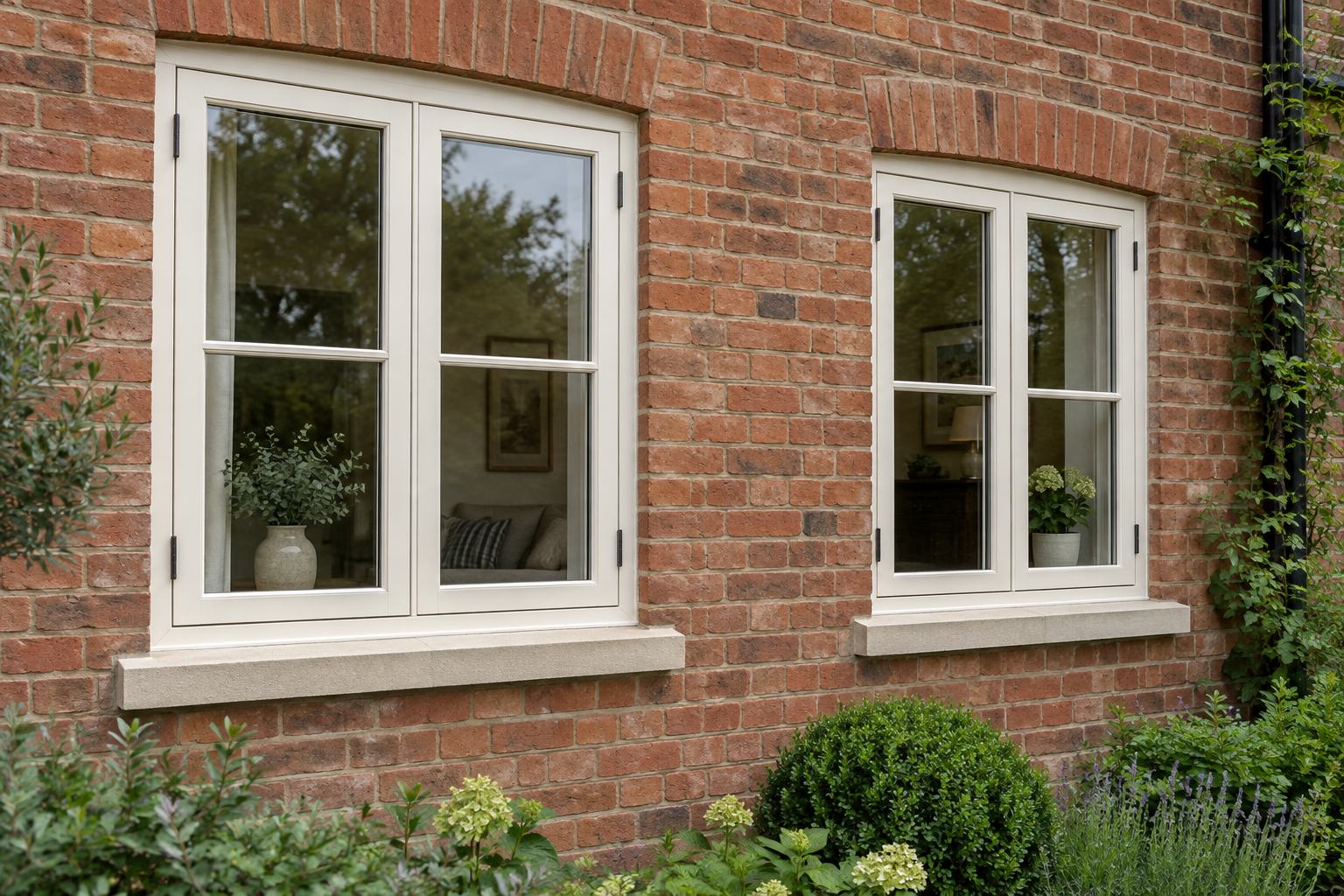
What tips most people towards full replacement is whether the frames themselves are still worth keeping. If the hinges, locks and profiles are sound and only the glass has failed, a sealed unit swap is far cheaper. If the frames are beyond repair, full replacement can provide improved energy performance and modern locking. Ask the installer to assess repairable faults first and confirm the compliance paperwork for a complete replacement.
Signs Your Windows Need Replacing
- Several frames let in noticeable draughts even when shut and locked
- Timber sills or bottom rails are soft, split or show rot when pressed
- Old uPVC has discoloured, gone brittle or the corner welds have cracked
- Casements have dropped on their hinges and have to be lifted to close
- Windows still have single glazing, or double glazing with wide aluminium spacer bars from decades ago
- Espagnolette locks are worn and spare parts for the old hardware are no longer made
- Upstairs bedroom windows are too small or awkward to use as an escape route in a fire
Window Materials and Styles Explained
Replacement double glazing is available in three main frame materials, and each suits different homes and budgets:
- uPVC — the most common and usually the least expensive. Multi-chambered profiles insulate well, need little upkeep and come in white, cream, grey and woodgrain foils.
- Aluminium — slimmer sightlines and larger glass areas, popular for modern houses and extensions. Look for a thermally broken profile so the frame doesn't become a cold bridge.
- Timber — often preferred or required for period properties and conservation areas. Engineered, factory-finished timber lasts far longer than older softwood but costs more and needs periodic redecoration.
Within each material you can choose side-hung or top-hung casements, tilt-and-turn windows that open inwards for cleaning, vertical sliding sash replicas, and bay or bow window assemblies. Glass options include low-emissivity coatings, argon gas fill, warm-edge spacer bars and, for noisy roads, acoustic laminated glass. Triple glazing is available but adds weight and cost, so ask whether the extra performance is worth it for your elevation.
What to Include When Asking for a Quote
Count the openings and note the type of each one — a flat casement, a three-sided bay, a bow, a small landing window or a large fixed pane — because bays and bows are priced very differently from flat frames. Say which rooms they serve and whether any are upstairs bedrooms, as those may need escape-compliant openings. Mention if the house has stone mullions, rendered reveals, internal timber boards or tiled sills that could be disturbed when the old frames come out.
Tell the installer what you want to change rather than just "new windows": better sound insulation towards a road, a different opening style, a colour or woodgrain finish, or a sash look to suit a period terrace. If the house is in a conservation area or is a flat, say so up front because it affects which products can be offered.
A good written quote should list every window with its size, style, frame material and glass specification, including the U-value or energy rating. It should state whether trickle vents are included, who will register the work with building control or a competent person scheme, how the old frames will be disposed of, what making good inside and out is covered, and how long the frame, glass units and hardware are guaranteed for.
How Much Does Double Glazed Window Replacement Cost?
| Job size | Typical cost |
|---|---|
| Single standard casement window | £550 – £1,200 |
| Several windows or a bay (3–5 openings) | £2,000 – £5,500 |
| Larger window order; premium frames and more openings can exceed this guide | £5,500 – £12,000+ |
These are guide figures for supply and fitting. Frame material has the biggest effect: uPVC sits at the lower end, while aluminium and engineered timber push towards the top of the range. Bays, large fixed panes, coloured finishes, acoustic glass and difficult access all add to the price.
The Window Replacement Process: What to Expect
- Survey. The installer measures every opening precisely, checks the condition of the brickwork and lintels, and confirms styles, colours and glass.
- Manufacture. Windows are made to order. Lead times are often several weeks, and longer for timber or non-standard colours.
- Removal. On fitting day the old sashes and glass are taken out first, then the frames are cut out, working one or two openings at a time so the house isn't left open.
- Installation. Each new frame is positioned, packed, fixed into the reveals and checked for level and square before the glass is fitted.
- Sealing and finishing. The outside is sealed, internal trims or plaster repairs are completed, and cills are fitted.
- Handover. Locks and handles are demonstrated, keys handed over, and the building regulations certificate follows once the work is registered.
Planning Permission and Building Regulations
Replacing windows in a house with new ones of a similar appearance is usually permitted development, so planning permission is not normally needed. Listed buildings, homes in conservation areas or under an Article 4 direction, and flats can be different — leaseholders may also need consent from the freeholder. The Planning Portal guidance on doors and windows covers the main points for England.
Building regulations are a separate matter. Whole replacement windows in England and Wales are controlled work: they must meet thermal performance standards, keep or improve ventilation and escape routes, and use safety glass in critical locations. The simplest route is an installer registered with a competent person scheme such as FENSA, who can self-certify the job; otherwise building control must be notified. Scotland and Northern Ireland have their own systems, so check locally.
How to Choose a Window Replacement Installer
- Is the company registered with a competent person scheme, and will you receive the certificate?
- Is the guarantee insurance-backed if the firm stops trading?
- Who manufactures the frames and sealed units, and what energy rating do they carry?
- Will the same team survey and fit, or is installation subcontracted?
- How will upstairs escape windows and trickle vents be handled?
- What deposit is required, and when is the balance due?
- Can you see recent jobs on similar houses nearby?
Frequently Asked Questions
Can I replace just some of my windows?
Yes. Many people replace the worst elevations first. Ask the installer to match the profile, colour and sightlines to your existing frames so a mixed set still looks consistent from the street.
Will new windows stop condensation?
They usually reduce condensation on the glass because the inner pane stays warmer, but a tighter house can trap more moisture in the air. Keep trickle vents open and use extractor fans in kitchens and bathrooms.
How much mess does window replacement make?
Some plaster around the reveals can crack when old frames are cut out, and there is dust at each opening. A careful installer covers floors and furniture and makes good the reveals, but decoration afterwards is usually your responsibility.
Is triple glazing worth it over double glazing?
For most UK homes, a good double glazed window with low-emissivity glass and warm-edge spacers performs well. Triple glazing adds cost and weight, and its value depends on the proposed whole-window performance. For noise, compare tested acoustic performance: an extra pane alone does not guarantee better sound reduction.
Ready to compare prices? Send one free enquiry and up to four local window installers may be in touch to arrange a survey.