
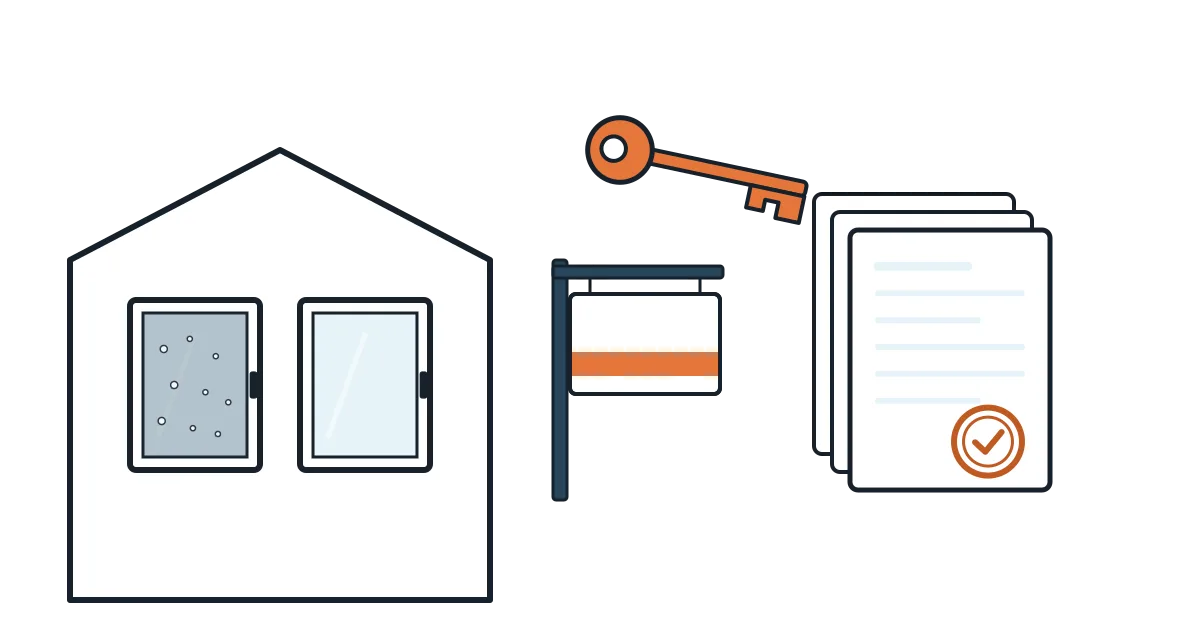
Windows and doors are easy to overlook on a viewing, and expensive to deal with afterwards. A house full of tired frames or misted panes can add several thousand pounds to what you need to spend in the first year. This guide covers what to look at, what paperwork to ask for, and how to use what you find.
What to check on a viewing
- Misted panes. Look at every window in daylight, from inside and outside. Moisture between the layers means a failed sealed unit. One or two is a modest cost. Many suggests the whole house is at that stage.
- Opening and closing. Open and shut each window and door. Dropped casements, stiff locks and handles that need force point to tired hardware.
- Frame condition. Press sills and bottom rails of timber frames for softness. In uPVC, look for yellowing, brittleness and cracked welds.
- Draughts and seals. Look for perished or missing gaskets, and feel for air around closed windows.
- Doors. Check the front and back doors for dropping, sticking, damaged glass and a lock that works smoothly.
- Trickle vents and escape. Check that bedroom windows can still be opened wide enough to climb out of.
If you find faults, our guide to double glazing problems explained helps you work out what each one means, and our signs your double glazing needs replacing checklist helps you score the windows one by one.
The paperwork to ask for
In England and Wales, replacement windows and doors fitted since 2002 should have a certificate showing they complied with the Building Regulations. That is usually a FENSA or similar competent person scheme certificate, or a building control completion certificate. Your solicitor should ask the seller for it, and for guarantees on the windows. If the seller can't produce a certificate, ask your solicitor how that will be handled, since a missing certificate can come up when you later come to sell.
A certificate shows the work met the regulations. A guarantee covers faults with the product. Ask whether any guarantee on the windows is still in force and whether it passes to a new owner.
Putting a price on what you find
Typical costs to budget for common findings
| What you find | Typical cost | Where to read more |
|---|---|---|
| A few misted panes | £80–£450 | Misted glazing cost guide |
| Several failed units, some needing safety glass | £500–£900+ | Blown unit cost guide |
| Tired frames throughout the house | £2,000–£12,000+ | Window replacement cost guide |
| A tired back or front door | £900–£4,000 | Door replacement cost guide |
Get the figures into your negotiation. A realistic written estimate for the work is much more persuasive than a general complaint about old windows. The double glazing cost calculator can help you work out a range quickly, and a survey may flag the same issues.
After you move in
There's no need to replace everything straight away. Fix anything that affects security, safety or weatherproofing first: broken glass, locks that don't work and rotten frames. The rest can wait until you've decided on your budget and your plans for the house, particularly if you're thinking about an extension or redecorating. When you're ready, double glazed window replacement is the page to start from, or uPVC window replacement if you want the lowest-cost option.
How to check the double glazing when viewing a house
- Check every pane for moisture
In daylight, look at each window from inside and outside for moisture or a cloudy film between the panes.
- Operate every window and door
Open, close and lock each one. Note any that drop, stick or need force.
- Inspect the frames
Press timber sills for softness and look for yellowed, brittle or cracked uPVC.
- Ask for the certificates
Ask the seller, through your solicitor, for FENSA or building control certificates and any guarantees.
- Cost the faults
Put a realistic estimate on the problems and use it in your price negotiation.
Frequently asked questions
Should old double glazing put me off buying a house?
Not usually. It's a cost to plan for, not a reason to walk away. Get an idea of the likely bill and factor it into your offer.
What certificate should I ask for?
For replacement windows and doors in England and Wales, a FENSA or other competent person scheme certificate, or a building control completion certificate. Your solicitor can ask the seller for it.
Does a missing certificate matter?
It can come up when you sell, because buyers' solicitors often ask for one. Ask your own solicitor how it should be dealt with before you exchange.
Can I use faulty windows to negotiate the price?
Yes. A realistic written estimate for the work is a stronger basis for a lower offer than a general comment that the windows are old.
Ready to talk to a double glazed window replacement specialist?
Get Free Quotes →